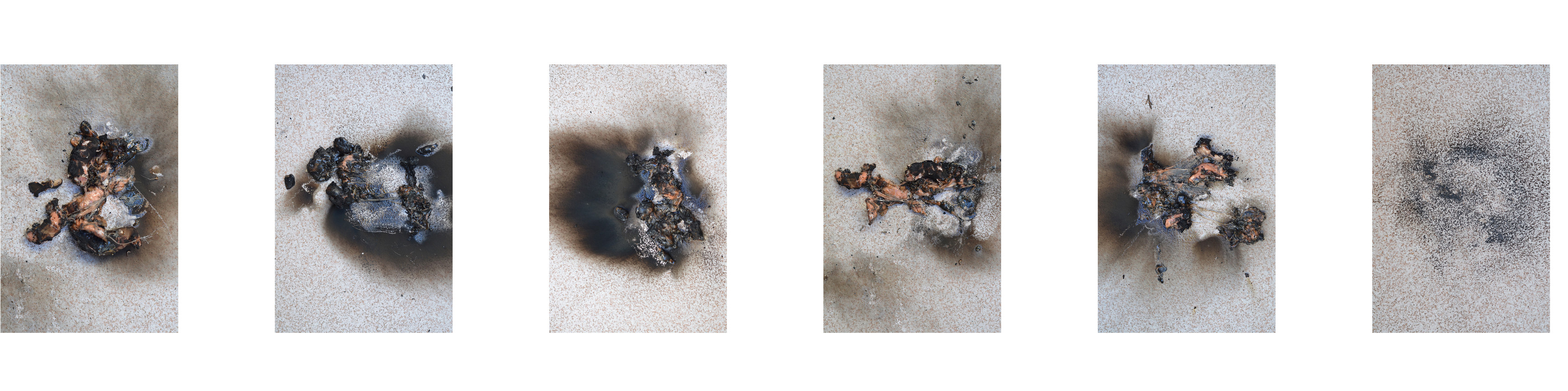
2002–2008 — Research into war photography, archives, and systems of image production and control
2004–2005 — Internet-based images, circulation, and physical reconstruction
2006 — Cholesterol LDL: direct-flash photography and the production of partly uncontrolled visual information
2008 — Recreational Area: from accumulation toward subtraction and digital manipulation
→ Capital — the development of this process into a broader investigation of the city, image, and information
Archive — Examining Systems of Image Production and Control
My practice began to take shape around 2002, while I was still a student, through research into war photography, particularly images of the Iran–Iraq War. Part of this research involved comparing official and independent photography: looking at how the same subject could be produced and seen differently within different systems of image-making, and how those differences might relate to the photographer’s position, institutional structures, and ideological context.
This research continued between 2002 and 2008. I spoke with independent photographers as well as photographers working within state institutions, and gained access to archives that were not normally open to the public. Across these images, questions of violence, the physical consequences of war, and the ideological organization of the image were constantly present. Photographs of wounded bodies, corpses, or the direct effects of war were not necessarily excluded; these images could themselves participate in the construction of an ideological narrative.
This experience made me think of the archive not as a neutral collection of documents, but as a system that preserves, selects, classifies, and gives meaning to images. At the same time, something always remains in an image that cannot be fully controlled. Ideology can organize an image, but the image never completely dissolves into ideology.
Internet — An Open Field and an Accumulation of Data
During the same period, the internet became increasingly important to the way I worked. It quickly became more than a source of images. I experienced it almost as a landscape: an open field of data and images where war, bodies, cities, animals, everyday objects, news photographs, amateur images, fabricated images, and images of uncertain origin could appear almost simultaneously beside one another.
There was a connection between this condition and my experience of the archive. The war archives I had been researching were restricted, classified, and controlled; the internet was open, dispersed, and constantly changing. But in both cases, what interested me was not simply looking at images. I was interested in how an image is produced, circulated, selected, and read again within a much larger field of information.
At first, this led me toward physical reconstructions. An image encountered online could become a small scene, a figure, or a provisional construction, then be photographed again and return as another image. With each transition, some information disappeared while something else was produced.
Abu Ghraib, or How to Engage in Dialogue2004Sharpened Edges2004The Benefits of Vegetarianism2004Wire, Plastic and Anatomy2005
Flash Photography — The Sudden Production of Partly Uncontrolled Information
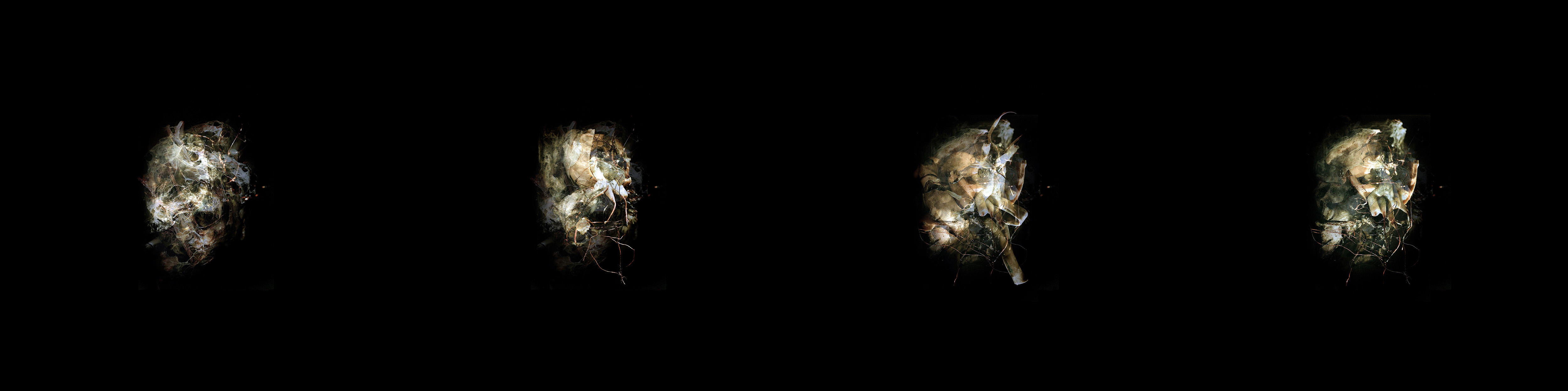
Cholesterol LDL, 2006
Alongside this, direct-flash photography became another important part of my practice. In Cholesterol LDL (2006), I worked quickly, usually photographing people, objects, rooms, and situations around me with direct flash.
Flash gave me several things at once: the possibility of photographing almost instantly in low light, without preparing the lighting or staging the scene; a raw and slightly anti-aesthetic quality; and, most importantly, a large amount of visual information recorded in a fraction of a second.
At night or in interior spaces, parts of a scene could become fully visible only at the moment the flash went off. My control over the surface of the image was therefore never complete. Details, reflections, surfaces, objects, and things that were not necessarily at the center of my attention could suddenly acquire a strong presence in the photograph.
What interested me was precisely this excess of information, partly outside my control, that flash introduced into the image. In that sense, this way of working was connected to the larger question that had already emerged through the archive and the internet: what information an image is made from, what enters it, and what remains beyond the control of the person producing it.
Cholesterol LDL2006
Recreational Area — From Accumulation Toward Reduction and Manipulation
Recreational Area, 2008
By 2008, this interest in the accumulation of visual information had begun to move toward an act of subtraction. Just as flash could suddenly reveal a large amount of information, it could also blow out parts of an image, flatten them, or make certain information disappear. That relationship between an excess of information and its loss became increasingly important to me.
I gradually felt that photography alone was no longer enough for what I wanted to do, and that I needed to manipulate the photographic image more directly. In Recreational Area (2008), this developed into a digital process. The images came from different sources and categories — material found online, news and amateur images, fabricated images, as well as photographs I had made myself — and I began removing parts of their visual information.
Colour, texture, depth, and details that seemed excessive were reduced until the image was left with simpler lines, surfaces, and elements. For me, this was not simply about developing a graphic language. It was a way of examining an image through the reduction of information — something close to what I would later describe as visual deduction.
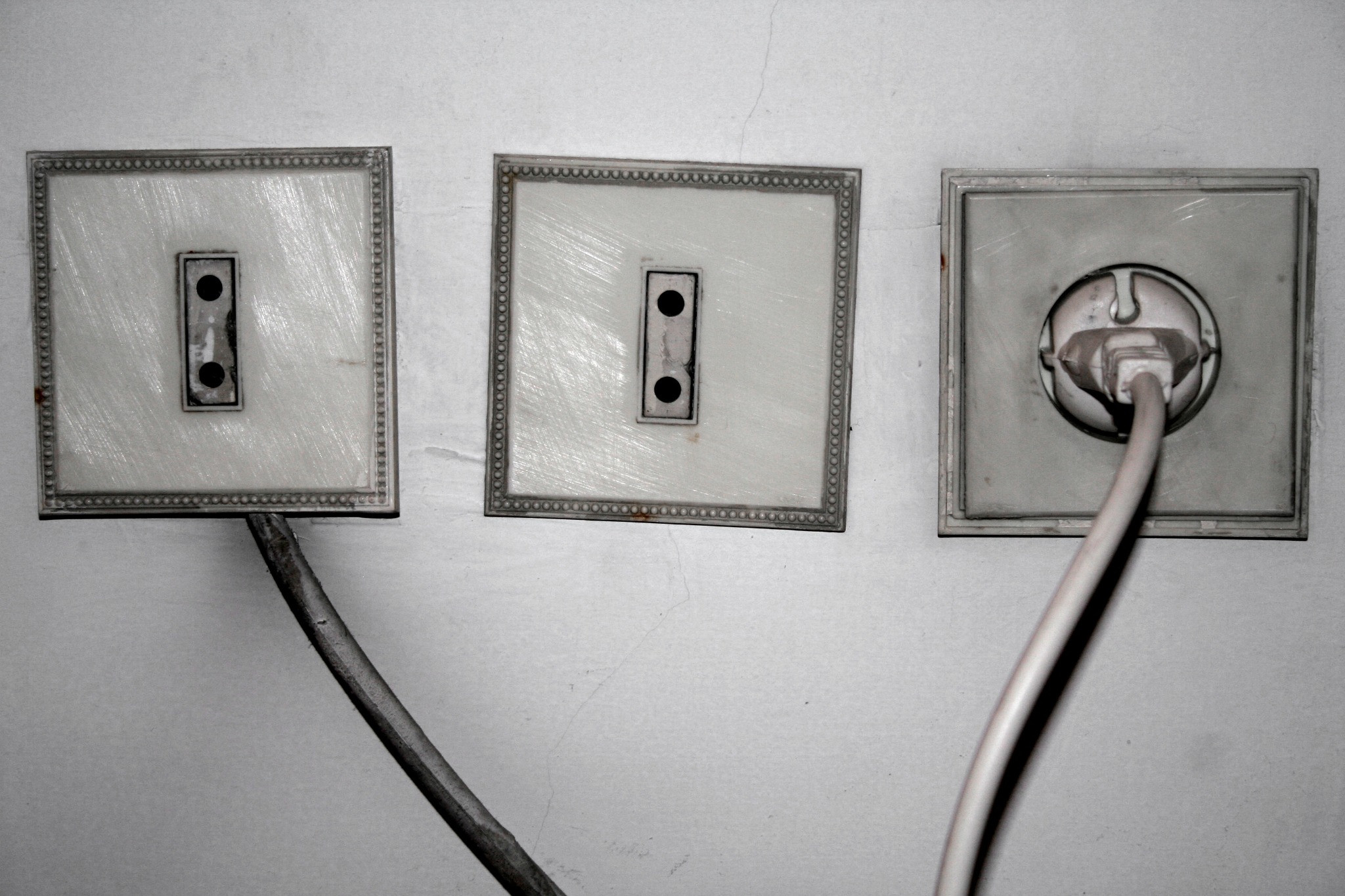
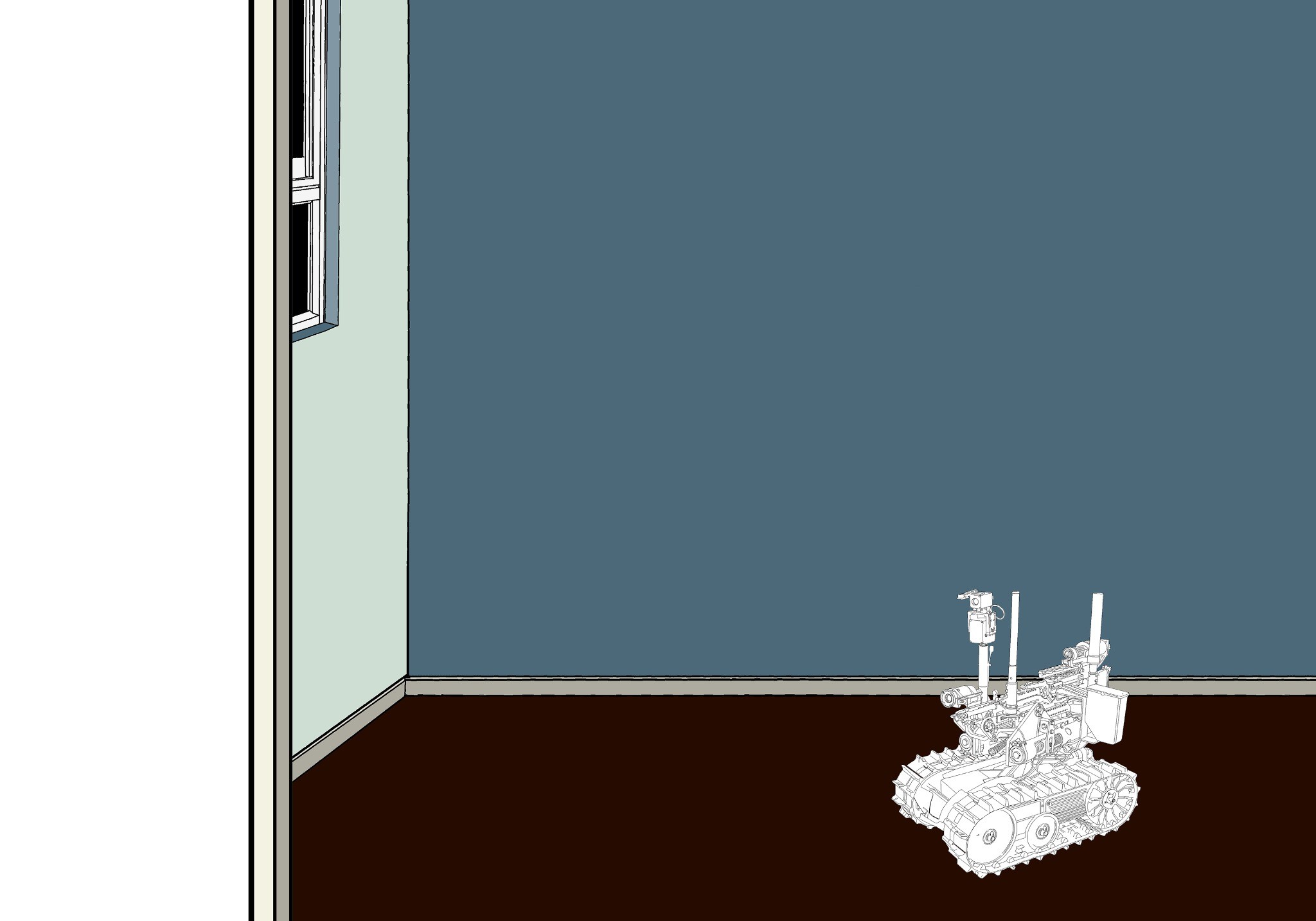
Each of the nine images in Recreational Area deals with a different situation, but when they are placed together, a broader logic begins to emerge from these different categories. A game, a medical environment, a wall, consumer objects, or a robot can be removed from their original contexts and brought into a shared visual structure. The relationship between them does not need to be narrative or direct; the work takes shape through the way these different situations and categories accumulate, are reduced, and are reorganized.
Looking back, I also understand Recreational Area as part of an early post-internet approach in my work — not because the internet itself was the subject, but because existing and circulating images had become material: something that could be extracted from one context, manipulated, reduced, and reactivated within another.
This process of subtraction and digital reworking later became an important foundation for Capital, where this visual language expanded beyond a single photograph or a limited group of images into a broader structure involving the city, images, and information.
Recreational Area20089 worksLambda print / Diasec100 × 70 cm eachOverall installed dimensions approximately 210 × 300 cm
The sequence itself also remained open. Around 2011–2013, I returned to the small figures and constructed scenes again. By then I was less dependent on an identifiable source image. In the earlier Abu Ghraib works, the image behind the reconstruction could still be recognized. In these later works, the sources had become more dispersed.
I was continuously encountering images of older and contemporary wars, emptied cities, damaged landscapes, news photographs, staged scenes, fake images, animals, objects and fragments whose original context was sometimes already unclear. Rather than reconstructing one photograph, I began constructing scenes from the pressure left by many images.
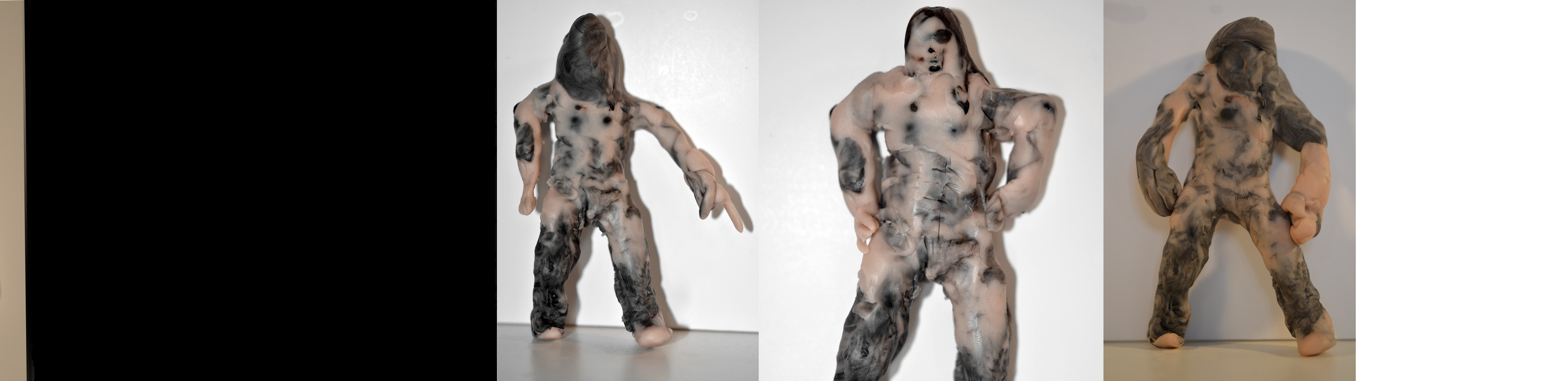
The process remained contradictory in a way that was important to me. Conceptually, the works were highly constructed, but physically I worked quickly, spontaneously and sometimes almost expressionistically. I used whatever allowed me to build a situation: ready-made figures, architectural-model materials, miniature plants and animals, found objects and handmade elements. Some bodies were altered or modeled by hand, particularly when I wanted their anatomy to become unstable or deformed.
The body became increasingly important, but not as a stable human center. I was interested in its weakness, vulnerability and its strange proximity to objects. A body, an animal, food, a plant, a fragment of architecture or another object could occupy the same constructed field without the human figure automatically organizing everything around itself.
I think some of this came from my earlier encounters with photographs of dead bodies in the war archives. There was a particular silence in those photographs. A dead body could become strangely close to a landscape: still, dry, no longer acting upon its surroundings. Something of that silence remained in these artificial bodies.
At other moments there is aggression. Bodies are deformed, pulled, damaged or caught inside situations that are difficult to resolve. But the aggression is rarely presented at the point of dramatic conclusion. It remains suspended. Something may already have happened, or something may be about to happen.
By this point, the original source image did not always need to remain visible. Sometimes what survived was only an afterimage: a gesture, an empty landscape, an anatomical distortion, the position of a body, an atmosphere of violence, or something encountered online whose origin had already dissolved into the accumulation of other images.
What remained constant was the movement between archive, network, construction and photography. An image could be encountered, absorbed, materially reconstructed, photographed, digitally altered and returned again as another image. No single state of the image had to be final.
Only much later did terms such as post-internet practice and forensic aesthetics give me ways of recognizing some of these operations: circulation through networks, movement between physical and digital states, changes of scale and context, and the instability of the image as both document and object. The work came first. The terminology came later.
The Man and His Ego2011Glitch FiguresUntitled[date to be defined]Glitched Figures[date to be defined]